
Understanding Taoism, Buddhism, and Chinese Folk Beliefs
July 29, 2026 · HE FAJIE 何法杰
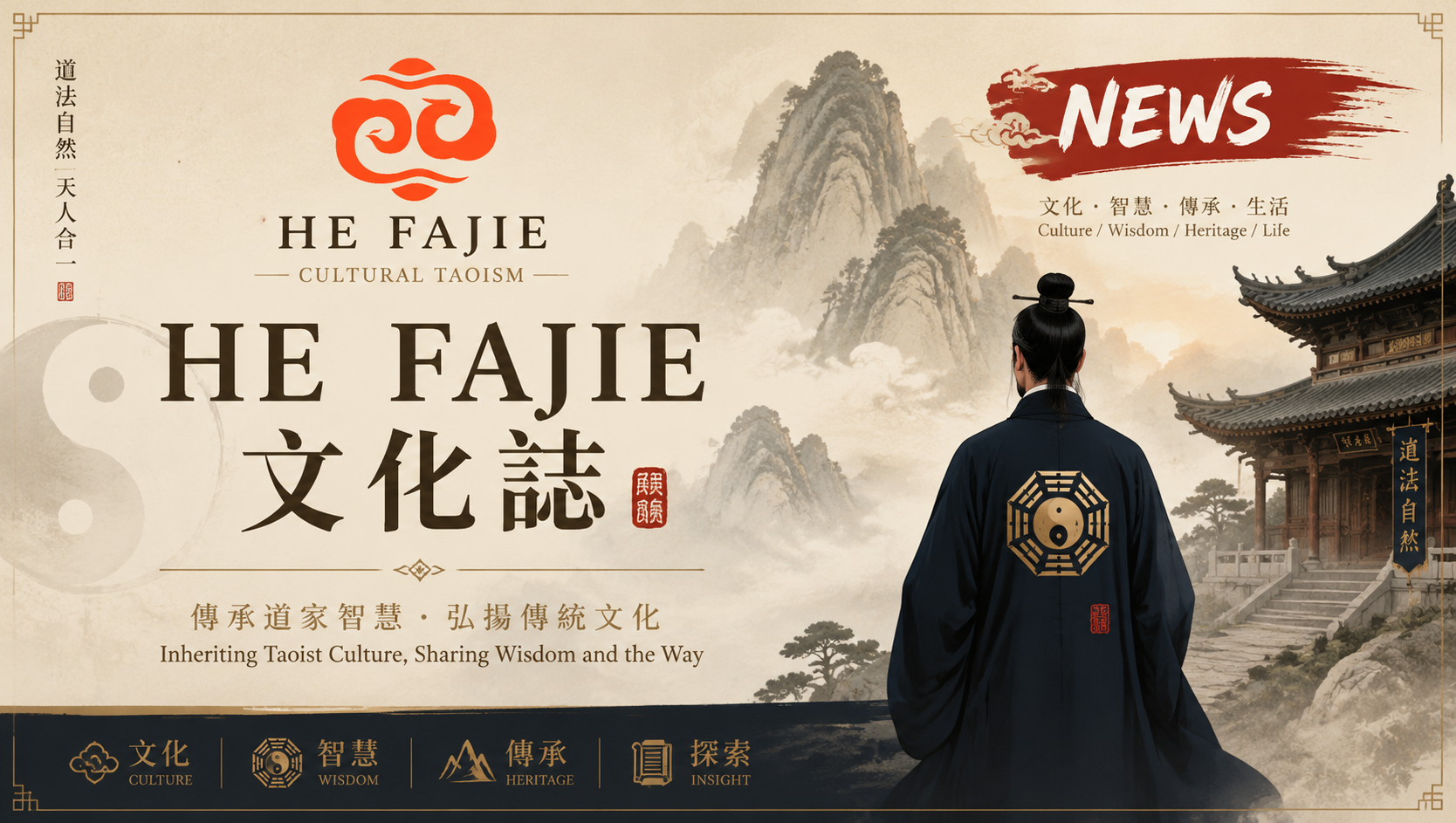
Introduction to Taoism, Buddhism, and Chinese Folk Beliefs
For newcomers to Chinese spirituality, the interconnected traditions of Taoism, Buddhism, and Chinese folk beliefs can be both fascinating and complex. Each tradition has its own unique history, rituals, and philosophical underpinnings, yet they often overlap and influence one another in profound ways. In this article, we will explore the origins, key concepts, and practices of these traditions, providing a comprehensive overview to help you better understand and appreciate these rich cultural heritages.
Taoism: The Way of Harmony
Taoism, also known as Daoism, is one of the oldest indigenous philosophies and religions of China. It emphasizes living in harmony with the Tao, or the Way, which is the fundamental nature of the universe. The foundational text of Taoism is the Tao Te Ching (Dao De Jing), attributed to the sage Laozi (Lao Tzu). Key concepts in Taoism include:
- Wu Wei (Non-Action): Emphasizing the practice of non-interference and allowing things to unfold naturally.
- Yin and Yang: The concept of complementary forces that maintain balance in the universe.
- Qi (Chi): The life force or energy that flows through all living things.
Taoist practices often involve meditation, qigong (chi kung), and the use of talismans and ritual objects. For example, the Taoist Triangular Talisman is believed to bring protection and balance to its bearer.
Buddhism: The Path to Enlightenment
Buddhism, introduced to China from India around the 1st century CE, has had a profound impact on Chinese culture and spirituality. The core teachings of Buddhism, as outlined in the Four Noble Truths and the Eightfold Path, focus on the cessation of suffering and the attainment of enlightenment. Key concepts in Chinese Buddhism include:
- Karma: The principle that actions have consequences, influencing one's future.
- Rebirth: The belief in multiple lifetimes and the cycle of samsara.
- Bodhisattvas: Enlightened beings who delay their own complete enlightenment to help others achieve it.
Chinese Buddhism has developed its own unique characteristics, such as the emphasis on Zen (Chan) practices and the veneration of Bodhisattvas and deities. Ritual objects like the Handcrafted Copper Dao Bell, Sanqing Bell, Taoist Ritual Instrument are often used in meditation and ceremonial practices.
Chinese Folk Beliefs: A Blend of Traditions
Chinese folk beliefs encompass a wide range of local customs, traditions, and practices that have evolved over thousands of years. These beliefs often blend elements from Taoism, Buddhism, and other indigenous religions. Key aspects of Chinese folk beliefs include:
- Ancestor Worship: Honoring and seeking the guidance of ancestors.
- Feng Shui: The practice of harmonizing the environment to promote well-being and prosperity.
- Deities and Spirits: Veneration of various deities and spirits associated with different aspects of life.
Folk beliefs are deeply rooted in daily life and are often expressed through rituals, festivals, and the use of protective amulets and talismans. For example, the Taoist Bracelet Purple Microcosm Taboo Tai Chi Bagua Fortune Beads is traditionally believed to offer protection and bring good fortune.
The Significance of the Obsidian Bracelet
In the context of Chinese spirituality, the obsidian bracelet holds a special place. Obsidian, a natural volcanic glass, is known for its protective and grounding properties. It is believed to:
- Protect Against Negative Energies: Obsidian is traditionally used to shield the wearer from negative influences and psychic attacks.
- Enhance Intuition and Clarity: It is said to help the wearer connect with their inner wisdom and make clear decisions.
- Promote Healing and Grounding: Obsidian is thought to balance the root chakra, promoting a sense of stability and well-being.
While the obsidian bracelet is not specific to any one tradition, it is widely respected in Chinese spiritual practices for its protective and balancing qualities. Whether you are drawn to Taoism, Buddhism, or Chinese folk beliefs, an obsidian bracelet can be a meaningful addition to your spiritual toolkit.
Conclusion
Understanding the rich tapestry of Taoism, Buddhism, and Chinese folk beliefs can deepen your appreciation for the cultural and spiritual heritage of China. Whether you are interested in the philosophical insights of Taoism, the path to enlightenment in Buddhism, or the practical wisdom of folk traditions, there is something to be gained from exploring these traditions. Whether you choose to wear an obsidian bracelet for protection, use a Taoist Triangular Talisman for balance, or practice with a Handcrafted Copper Dao Bell, these practices can enrich your spiritual journey and connect you to the timeless wisdom of the East.
If you are interested in exploring these traditions further, we invite you to browse our Ritual Objects and Talismans (Fu) collections, where you will find authentic, energy-blessed items that can enhance your spiritual practice.
Originally published by HE FAJIE 何法杰 · 法杰开运文化 (法傑開運文化).
This article draws on the study of Chinese Taoist heritage, folk wisdom and traditional craftsmanship, and is intended to share the ideas, historical background and artistic value of Eastern culture. References to feng shui, symbols and traditional customs are provided for cultural learning and discussion only, and do not constitute any medical, scientific or guaranteed-result claims.
Explore more Eastern culture: hefajie.com